
2026 High Country Septic System Guide for Central Colorado Mountain Home Builders


Building in the Colorado Rockies is different than building anywhere else in the country. Between steep slopes, shallow bedrock, snow loads, difficult access, and evolving state septic regulations, planning your wastewater system correctly can make or break your project budget.
For property owners and builders across Central Colorado mountain counties like Lake County, Chaffee County, Park County, Summit County, Eagle County, Gunnison County, Pitkin County, Garfield County, Mineral County, and surrounding Rocky Mountain communities, septic system costs in 2026 vary dramatically depending on:
Bedroom count
Soil conditions
Elevation
Slope
Rock excavation
Access
Hauling distance from gravel pits
Gravity vs pressure-dosed system design
Colorado’s updated Regulation 43 standards continue pushing many mountain properties toward engineered septic systems and advanced treatment designs.
What Is Regulation 43 and Why It Matters in Colorado Mountain Counties
Colorado regulates septic systems under Regulation 43, officially called the On-Site Wastewater Treatment System (OWTS) regulations. Counties administer permits locally, but all county rules must meet or exceed state standards.
In June 2025, Colorado adopted major updates to Regulation 43, and counties across the state are implementing stricter local rules throughout 2026.
For high-elevation mountain properties, these updates often mean:
More detailed soil testing
Engineered septic designs
Increased inspections
Pressure dosing requirements
Larger setbacks
Advanced treatment systems on marginal soils
Mountain counties like Summit, Eagle, and Pitkin already enforce some of Colorado’s strictest OWTS requirements because high-altitude conditions create major wastewater treatment challenges.

Typical Septic System Costs in Central Colorado (2026)
Standard Gravity-Fed Septic Systems
For favorable soils and accessible lots, traditional gravity-fed systems remain the most affordable septic option in Central Colorado.
Typical Installed Costs
Home Size | Gravity Septic System Cost |
2 Bedroom Gravity System | $9,500–$12,000 |
3 Bedroom Gravity System | $10,000–$14,000 |
4 Bedroom Gravity System | $14,000–$20,000+ |
These price ranges generally apply to:
Good native soils
Minimal rock excavation
Moderate slopes
Easy equipment access
Short hauling distances
Conventional trench systems
Basic gravity systems remain common in portions of:
Buena Vista
Salida
Fairplay
Hartsel
South Park
Lower elevation Chaffee County
Portions of the Arkansas River Valley
all front range counties

Engineered & Pressure-Dosed Colorado Septic Systems
As elevation and site difficulty increase, pressure-dosed and engineered systems become far more common.
Typical 2026 Engineered System Costs
Home Size | Pressure-Dosed / Engineered Cost |
2 Bedroom | $18,000–$30,000 |
3 Bedroom | $22,000–$40,000 |
4 Bedroom | $30,000–$55,000+ |
These systems often include:
Lift stations
Timed dosing pumps
Sand filters
Mound systems
Advanced treatment units
Imported sand media
Pressure distribution networks
Many mountain lots above 8,000 feet require specialized cold-climate septic designs due to shallow soils, frost depth, or bedrock limitations.
Why Soil Type Drives Septic Pricing in Colorado
Colorado septic systems are now heavily soil-dependent under updated Regulation 43 standards.
Ideal Septic Soils
The least expensive septic systems are installed in:
Sandy loam soils
Well-drained native soils
Deep unsaturated soils
Gentle terrain
These sites often qualify for conventional gravity-fed systems with minimal engineering.
Problematic Rocky Mountain Soils
Many Colorado mountain properties contain:
Shallow bedrock
Clay lenses
Tight soils
Seasonal groundwater
Fractured rock
Steep terrain
High groundwater tables
These conditions often trigger:
Engineered designs
Pressure dosing
Imported media
Elevated systems
Advanced treatment technology
The result can double or triple total project costs.
Gravity vs Pressure-Dosed Septic Systems
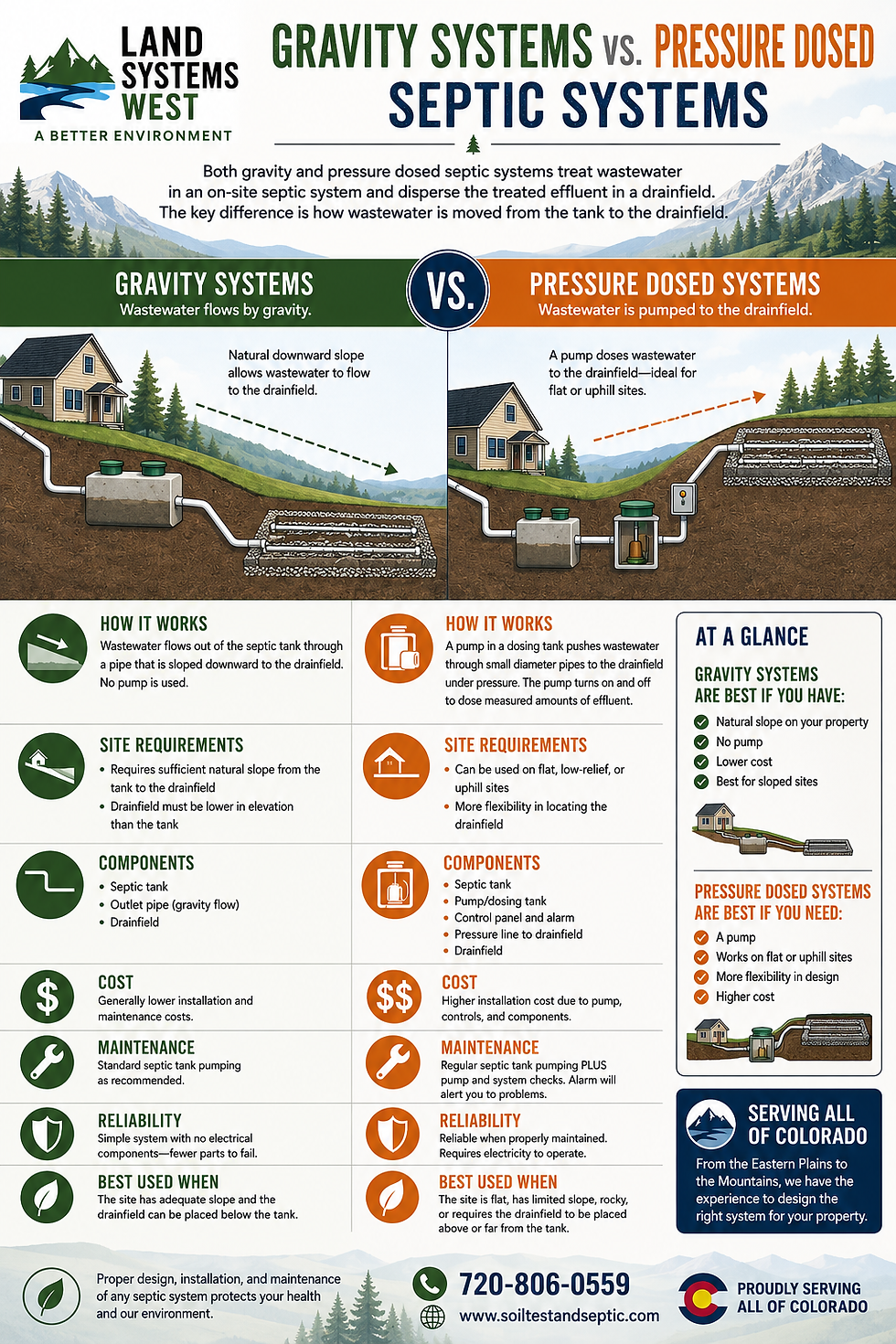
Gravity Septic Systems
Gravity systems rely on natural slope and elevation drop from the home to the septic tank and drainfield.
Advantages
Lower upfront cost
Minimal electrical components
Lower maintenance
Simpler long-term operation
Best Applications
Moderate slopes
Good soils
Accessible lots
Adequate fall across the property
Gravity systems remain the preferred option whenever site conditions allow.
Pressure-Dosed Septic Systems
Pressure-dosed systems use pumps to evenly distribute wastewater throughout the drainfield.
These systems are increasingly common throughout:
Leadville
Twin Lakes
Fairplay
Alma
Summit County
Eagle County
Aspen area properties
Steep mountain subdivisions
Advantages
Better effluent distribution
Improved treatment performance
Better performance on marginal soils
Greater design flexibility
Long lasting compared to gravity feed
Disadvantages
Higher installation costs
Pump replacement costs
Electrical requirements
Ongoing maintenance
Many mountain lots no longer qualify for simple gravity systems due to updated soil treatment requirements and site limitations.
The Hidden Cost Most Home Builders Miss: Gravel Pit Hauling
One of the largest variables in Colorado mountain septic pricing is hauling distance from gravel pits and material suppliers.
Most septic systems require:
Washed rock
Bedding sand
Backfill
Imported media
Aggregate
For remote Rocky Mountain properties, trucking costs become substantial.

Why Hauling Costs Matter
A septic drainfield may require:
Multiple aggregate loads
Sand deliveries
Equipment mobilizations
Imported engineered fill
Properties located far from:
Salida
Buena Vista
Glenwood Springs
Gypsum
Rifle
Summit County
Regional gravel pits
…often experience significantly higher installation costs.
Mountain hauling increases:
Fuel costs
Labor hours
Delivery time
Equipment wear
Scheduling complexity
For engineered systems requiring imported sand or media, trucking alone can add several thousand dollars to a project.
Site Conditions That Increase Septic Costs in the Rockies
Steep Slopes
Steep terrain increases:
Excavation difficulty
Equipment time
Safety requirements
Pipe depth management
Shallow Bedrock
Rock excavation is one of the largest unexpected septic expenses in mountain construction.
Hammer excavation or blasting can add:
$5,000–$25,000+
depending on rock depth and system size.
Remote Access
Remote mountain lots often require:
Additional mobilization
Specialized equipment
Longer labor hours
Smaller excavation equipment
Multiple delivery trips
Winter Construction
Frozen soils and snow access can significantly delay installation schedules throughout Colorado’s mountain counties.

County-by-County Septic Considerations in Central Colorado
Lake County Septic Systems
High elevation, shallow soils, and rock excavation commonly increase septic costs around:
Leadville
Twin Lakes
Turquoise Lake
Engineered systems are extremely common.
Chaffee County Septic Systems
Areas around:
Salida
Buena Vista
Nathrop
Poncha Springs
…often support conventional gravity systems in favorable soils, while mountain subdivisions may require pressure dosing.
Park County Septic Systems
Large rural lots around:
Fairplay
Hartsel
Jefferson
South Park
…can vary dramatically based on soil depth and groundwater conditions.
Summit County Septic Systems
Summit County continues implementing some of Colorado’s strictest septic requirements because of:
High groundwater sensitivity
High elevations
Short treatment seasons
Dense development pressure
Why Early Soil Testing Saves Thousands
One of the most expensive mistakes Colorado home builders make is designing the home before evaluating septic feasibility.
Early site evaluations help determine:
Maximum bedroom count
Gravity vs engineered feasibility
Drainfield sizing
Imported material requirements
Estimated installation costs
Under updated Regulation 43 rules, soil testing has become the foundation of compliant septic design across Colorado.

Final Thoughts for Colorado Rocky Mountain Builders
Every Colorado mountain property is unique. Two neighboring lots can have dramatically different septic costs based on:
Soil composition
Bedrock depth
Elevation
Drainage
Access
Hauling distance
System type
For builders across Central Colorado mountain counties, realistic 2026 septic budgeting should include:
Soil testing
Engineering
Permitting
Excavation
Rock removal
Hauling
Aggregate
Electrical work
Long-term maintenance
The earlier septic planning begins, the fewer surprises builders and homeowners encounter during construction.
WE ARE HERE TO HELP AND WE WANT YOU TO BUILD YOUR DREAM as budget friendly as possible.
Colorado CDPHE OWTS / Septic System Information — Statewide septic system regulations, Regulation 43 guidance, mound systems, pressure dosing, and homeowner resources.
Find Your Local Colorado Health Department — Directory of all Colorado county public health agencies and environmental health departments.
Mountain & Central Colorado Counties
Lake County Septic / OWTS Information — Septic permits, transfer of title inspections, and OWTS regulations for Leadville and Twin Lakes properties.
Chaffee County Environmental Health
Custer County Public Health & Environment
Fremont County Environmental Health Services
Gunnison County OWTS / Septic Information — OWTS regulations, transfer of title acceptance documents, and septic applications.
Summit County OWTS / Septic Systems
Eagle County Environmental Health & OWTS
Teller County Septic Services — Septic permits, transfer of title forms, maintenance resources, and OWTS regulations.
Front Range & Foothills Counties
Douglas County Septic Systems & OWTS — Regulation 43 updates, permit process, septic education, and OWTS requirements.
Jefferson County OWTS / Septic Systems
El Paso County Septic & OWTS Services
Southern Colorado Counties
Las Animas & Huerfano Counties OWTS Program — Septic permits, installer licensing, inspections, and wastewater treatment resources.


Comments