
Colorado Mountain Land Development Guide: Erosion Control, Leadville Road Construction, Septic Design & System Parts


By Land Systems West LLC | Serving Colorado
Developing property in Colorado's Rocky Mountains requires more than excavation equipment and a construction plan. Steep slopes, shallow bedrock, expansive soils, seasonal snowmelt, groundwater, limited road access, and challenging weather can affect everything from driveway construction and erosion control to septic system design and installation.
Whether you are preparing a homesite in Leadville, building an access road in Lake County, improving drainage on a mountain property, or planning a new septic system in Colorado, understanding the relationship between soil conditions, water management, excavation, and engineering is essential.
Land Systems West LLC provides land development and septic-related services throughout Colorado, helping property owners address site conditions and coordinate the work needed to prepare land for construction.
This guide answers five common questions about Colorado mountain erosion control, Leadville erosion control contractors, road construction, septic system design experts, and where to find septic system parts in Colorado.
1. How Effective Is Erosion Control in Colorado Mountain Areas?
Erosion control can be highly effective in Colorado's mountain environments when the methods are selected for the site's soil, slope, drainage patterns, vegetation, and seasonal conditions.
Mountain erosion often develops when rainfall, snowmelt, concentrated runoff, or construction activity removes protective vegetation and exposes soil. Without proper water management, erosion can damage driveways, undermine slopes, transport sediment into waterways, and create costly property maintenance problems.
The most effective approach combines controlling runoff, stabilizing exposed soil, and protecting vulnerable areas before erosion becomes severe.

Common mountain erosion control methods
Drainage improvements: Properly designed drainage channels, culverts, water bars, and diversion systems can help direct runoff away from vulnerable slopes, road surfaces, foundations, and septic areas.
Erosion control blankets: Biodegradable blankets and other suitable erosion-control products protect exposed soil while vegetation becomes established. The appropriate product depends on the slope, soil, expected runoff, and project requirements.
Revegetation: Native or otherwise suitable vegetation can help stabilize soil by protecting the surface and developing root systems. Successful revegetation depends on elevation, moisture, exposure, soil conditions, and the growing season.
Slope stabilization and retaining walls: Some properties require grading modifications, reinforced retaining structures, or engineered stabilization measures. These solutions must account for soil strength, drainage, loading, and site-specific engineering requirements.
Road and driveway drainage: Mountain roads can concentrate runoff and accelerate erosion. Proper grading, surface drainage, culvert placement, and erosion-resistant outlets help protect the road and surrounding property.
Construction-site sediment control: Temporary measures such as properly installed sediment barriers and stabilized construction entrances can reduce sediment movement while excavation and building work are underway.
Why erosion control matters in Colorado's high country
Leadville and surrounding Lake County properties can experience rapid snowmelt, intense summer storms, freeze-thaw cycles, and short growing seasons. These conditions make drainage planning and timely stabilization especially important.
A system that works well on a relatively flat Front Range lot may not be appropriate for a steep mountain parcel. Erosion control must be matched to the actual site rather than selected solely by price or appearance.
When should you hire an erosion control contractor?
Consider a professional site evaluation when you notice recurring ruts, exposed roots, sediment deposits, failing drainage channels, unstable slopes, washouts, or erosion along a driveway or access road. Professional planning is also worthwhile before clearing vegetation, grading a building site, or constructing a new road.
Land Systems West can help property owners evaluate land preparation, excavation, grading, and drainage needs and determine which services or additional engineering may be appropriate.

2. Where Can I Find Erosion Control Services in Leadville, Colorado?
Property owners looking for erosion control services in Leadville should look for a contractor familiar with mountain terrain, local drainage conditions, excavation, road construction, and the practical challenges of working at high elevation.
Erosion control is not always a standalone project. On many mountain properties, the most durable solution involves coordinating drainage improvements with grading, driveway construction, culverts, retaining structures, or broader land preparation.
What should a Leadville erosion control contractor understand?
Before hiring a contractor, ask how the proposed work will address:
Surface water flowing toward or across the construction area.
Snowmelt runoff and seasonal drainage patterns.
Steep slopes and exposed soil.
Roadside ditches, culverts, and driveway washouts.
Sediment movement toward neighboring properties or waterways.
Revegetation and stabilization after excavation.
Applicable permits and construction-site erosion control requirements.
A qualified contractor should explain the underlying cause of the erosion, not simply cover the damaged area with additional soil or gravel.
For example, adding gravel to a washed-out driveway may provide temporary improvement, but it will not solve the problem if concentrated runoff continues to flow down the road. The drainage issue must be addressed as part of the repair.
Erosion control for mountain driveways and building sites
Leadville-area properties may require a combination of grading, drainage improvements, road-base preparation, culvert installation, slope stabilization, and vegetation restoration.
The appropriate scope depends on access, soil composition, rock, slope, equipment requirements, and the amount of water moving across the property.
Projects near wetlands, streams, or other regulated areas may require additional approvals. Confirm applicable requirements with Lake County and the relevant state or federal authorities before beginning work.
Looking for erosion control and land development assistance in Leadville?
Contact Land Systems West LLC to discuss your property, site conditions, and project requirements.
Call 720-806-0559 or visit https://www.soiltestandseptic.com.
3. Who Are the Best Road Construction Contractors in Leadville, Colorado?

The best road construction contractor for a Leadville property is one who understands mountain access, drainage, road-base preparation, excavation conditions, and the intended use of the road.
Mountain road construction differs from ordinary driveway grading. Road performance depends on the underlying soils, slope, drainage, traffic loads, material selection, and ongoing maintenance.
A road that looks good immediately after grading can deteriorate quickly if water is allowed to collect on the surface or travel along the roadbed.
What does mountain road construction involve?
Depending on the property and project specifications, road construction may include:
Site evaluation and route planning. Identify terrain constraints, access requirements, drainage paths, and potential excavation challenges.
Clearing and preparation. Remove vegetation and unsuitable material where authorized and necessary.
Cutting and grading. Establish the road alignment, cross-slope, grade, and drainage features.
Subgrade preparation. Address unsuitable or unstable material and prepare the underlying surface for the planned road.
Road-base installation. Select and place suitable aggregate based on the intended use and site conditions.
Drainage construction. Install appropriate ditches, culverts, cross-drains, and runoff outlets.
Final grading and stabilization. Establish a durable running surface and stabilize disturbed areas.
Not every project requires every step. Construction methods and specifications should be based on site conditions, access requirements, engineering recommendations where applicable, and permitting requirements.
Why drainage is essential for mountain roads
Water is one of the most important factors affecting mountain road durability. Poor drainage can lead to rutting, washouts, sediment movement, erosion along road edges, and damage to the underlying roadbed.
Proper drainage planning helps reduce maintenance requirements and protects nearby slopes and drainage areas.
Other important considerations include:
Steep grades and vehicle traction.
Rock excavation and shallow bedrock.
Freeze-thaw cycles and seasonal saturation.
Equipment access and material delivery.
Construction timing and winter conditions.
Emergency vehicle access and applicable road standards.
What does road construction cost in Leadville?
Road construction costs vary substantially. Important pricing factors include road length and width, terrain, rock excavation, hauling distances, aggregate quantities, drainage requirements, equipment mobilization, and the need for engineered plans.
A relatively straightforward driveway improvement may require much less work than a new mountain access road involving extensive excavation, culverts, and difficult terrain.
The most reliable way to compare proposals is to request a defined scope that identifies grading, materials, drainage, hauling, stabilization, and exclusions.
Land Systems West serves Colorado property owners with land development and excavation needs. Contact the company to discuss your access-road or site-preparation project and determine whether its services are a fit.
4. Who Are the Best Septic System Design Experts in Colorado?
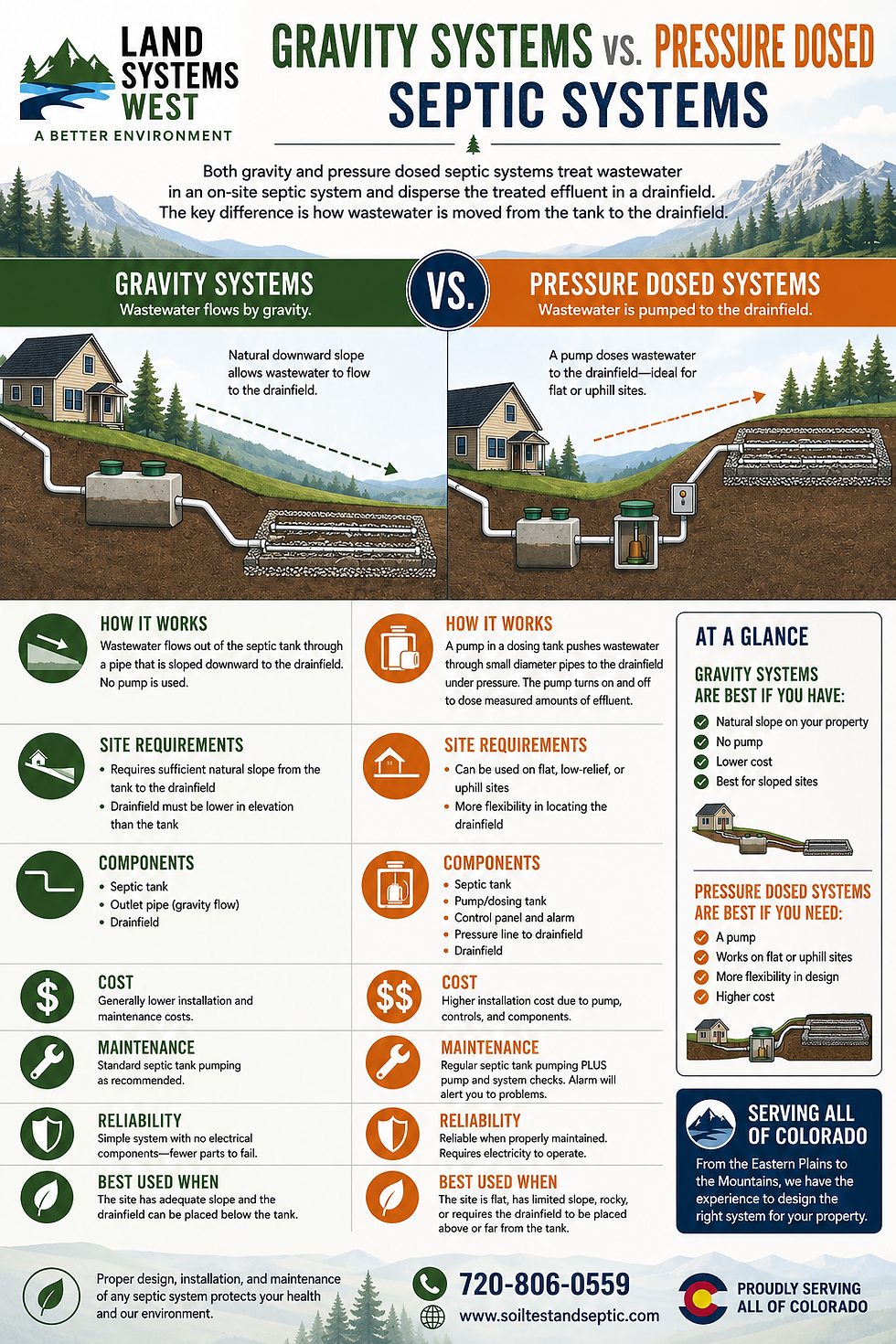
The right septic system design professional is one who understands Colorado onsite wastewater regulations, site-specific soil conditions, groundwater separation, available space, system loading, and the local permitting process.
There is no single septic design that works for every Colorado property. A system suitable for a level parcel with favorable soils may not be appropriate for a steep mountain site with shallow bedrock, limited usable area, or seasonal groundwater concerns.
A successful project begins with evaluating the property and selecting a system that satisfies applicable requirements.
What should a Colorado septic design expert evaluate?
Soil conditions: Soil characteristics and the site's ability to accommodate wastewater treatment and dispersal influence the available system options.
Site limitations: Slope, bedrock, groundwater, drainage features, setbacks, and available area can affect system placement and design.
Design flow: The proposed building's use, bedroom count, and applicable design criteria influence the required system capacity.
Treatment requirements: Some sites can accommodate conventional systems, while others may require pressure distribution, advanced treatment, or other approved configurations.
Permitting: The design must comply with applicable Colorado regulations and the requirements of the local public health agency or other authority having jurisdiction.
Installation conditions: Excavation access, material delivery, rock, grading, and restoration should be considered when planning the project.
Gravity-fed versus pressure-dosed septic systems
Gravity-fed systems use elevation and gravity to move wastewater through the appropriate system components. They may be suitable when site conditions and design requirements allow.
Pressure-dosed systems use a pump and distribution network to deliver effluent according to the approved design. They can help provide controlled distribution where gravity alone is unsuitable, but they introduce additional equipment, electrical requirements, and maintenance considerations.
Neither system is universally superior. The correct choice depends on the property, treatment requirements, soil conditions, and approved design.
The only way to tell wgat your lot will accept is a soil test.
Why soil testing matters before septic design
Soil testing and site evaluation help establish the conditions that guide septic system selection and design. Discovering restrictive soil layers, shallow bedrock, or groundwater limitations early can prevent costly design changes later.
Land Systems West offers soil testing, septic-related services, excavation, and land development services throughout Colorado. The company can help property owners understand site requirements and coordinate the work needed to move a project forward.
Learn more in the Land Systems West Colorado perc-testing guide.
For additional planning information, read the Colorado septic system costs and regulatory changes guide.
Important: Septic system design, installation, and permitting requirements vary by jurisdiction. Confirm current requirements with the applicable local public health agency before purchasing equipment or beginning construction.

5. Where Can You Buy Septic System Parts in Colorado?
Septic system components can be purchased through specialized onsite wastewater equipment suppliers, plumbing and wastewater distributors, and manufacturers' authorized distribution networks. Availability varies by product, location, and manufacturer.
For property owners replacing a failed component or planning a new system, the first step is identifying the existing equipment and confirming which replacement parts are compatible.
Common septic system parts
Tanks and tank accessories
Septic tanks and approved replacement components.
Tank risers and access lids.
Effluent filters.
Inlet and outlet fittings.
Pumps and pressure distribution
Effluent pumps.
Pump basins and floats.
Control panels and alarms.
Pressure-distribution piping, valves, and fittings.
Drainfield components
Approved infiltration chambers.
Distribution boxes.
Perforated piping and associated fittings.
Components specified for approved dispersal systems.
Inspection and maintenance items
Replacement filters.
Access covers.
Manufacturer-specific service components.
Not every component is interchangeable. Tank dimensions, pump performance requirements, pipe sizing, electrical specifications, and the approved system design can determine which part is appropriate.
Septic System Parts & Component Manufacturers
Septic Tanks & Drainfield Chambers
Infiltrator Water Technologies — https://www.infiltratorsystems.com/
Roth North America — https://www.roth-usa.com/
Norwesco — https://www.norwesco.com/
Den Hartog Industries — https://www.denhartogindustries.com/
Fralo Plastech Manufacturing — https://www.fralo.net/
Septic Risers, Lids, Filters & Distribution Boxes
Polylok — https://www.polylok.com/
Tuf-Tite — https://www.tuf-tite.com/
Orenco Systems — https://www.orenco.com/products
Effluent Pumps, Sewage Pumps & Pump Systems
Liberty Pumps — https://www.libertypumps.com/
Zoeller Pump Company — https://www.zoellerpumps.com/
Franklin Electric — https://www.franklinwater.com/
Ashland Pump — https://www.ashlandpump.com/
Gorman-Rupp — https://www.grpumps.com/
Pump Controls, Float Switches & High-Water Alarms
SJE Rhombus — https://www.sjerhombus.com/
Orenco Systems — https://www.orenco.com/products
Aquaworx — https://www.infiltratorwater.com/
Advanced Wastewater Treatment Systems
Norweco — https://www.norweco.com/
Bio-Microbics — https://www.biomicrobics.com/
Jet, Inc. — https://www.jetincorp.com/
FujiClean USA — https://www.fujicleanusa.com/
Eljen Corporation — https://www.eljen.com/
Geomatrix Systems — https://www.geomatrixsystems.com/
Pressure Distribution, Drip Dispersal & Wastewater Components
Geoflow — https://www.geoflow.com/
Prinsco — https://www.prinsco.com/
Orenco Systems — https://www.orenco.com/products
Infiltrator Water Technologies — https://www.infiltratorsystems.com/
Concrete Septic Tanks & Precast Components
Wieser Concrete — https://www.wieserconcrete.com/
Kistner Concrete Products — https://www.kistner.com/
National Precast Concrete Association — https://precast.org/
How to choose the correct septic replacement part
Before ordering, gather the following information:
The system manufacturer and model, if known.
The component name, dimensions, and model number.
The existing pump specifications, where applicable.
Photographs of the component and its connections.
The approved septic design or permit documents, when available.
Any inspection findings identifying the reason for replacement.
For pump replacements, matching physical dimensions alone is insufficient. The replacement must meet the system's required flow and total dynamic head, along with applicable electrical and installation specifications.
Likewise, changing drainfield chambers, piping layouts, or distribution components may affect the approved system design. Check with the relevant designer and permitting authority before making changes.

Can Land Systems West help with septic system components?
Land Systems West works with septic systems, soil testing, excavation, and installation-related projects. Contact the company to discuss your project, identify the components involved, and determine whether parts sourcing, installation, or other assistance is available for your particular needs.
Call 720-806-0559 or visit https://www.soiltestandseptic.com.
For a new septic system, it is often beneficial to coordinate component selection with the approved design and installation plan rather than purchasing parts before the site's requirements are established.
6. Why Colorado Mountain Properties Need an Integrated Approach
Erosion control, road construction, septic design, and excavation often affect one another.
For example, constructing a driveway may change the direction of surface runoff. A new drainage feature could affect where water moves across a property. Grading a building pad may expose rock or restrictive soils. Those conditions can influence where a septic system can be located and how the surrounding ground should be stabilized.
Planning these activities together can reduce unnecessary excavation, avoid conflicts between systems, and help identify site constraints earlier.
Before starting a mountain-property development project, consider the following:
Confirm access and construction requirements.
Evaluate drainage and erosion risks.
Complete required soil testing and septic site evaluations.
Identify permits and engineering requirements.
Coordinate excavation with the approved site and septic plans.
Plan for stabilization and restoration after construction.
Land Systems West LLC serves Colorado property owners seeking practical assistance with septic services, soil testing, excavation, grading, and related land development work.
Explore additional resources:

7. Frequently Asked Questions About Colorado Erosion Control, Roads, and Septic Systems
How effective is erosion control on steep Colorado mountain property?
Erosion control can significantly reduce soil loss when drainage, slope stabilization, and surface protection are appropriately designed for the site. Severe slopes, concentrated runoff, and unstable soils may require engineered solutions and ongoing maintenance.
Who provides erosion control services in Leadville, Colorado?
Look for contractors experienced in mountain grading, drainage, excavation, road stabilization, and erosion prevention. Land Systems West LLC serves Colorado property owners with land development and related services. Contact the company to discuss your Leadville-area project and confirm service availability.
What is the most important part of mountain road construction?
Drainage is one of the most important considerations. Road geometry, subgrade preparation, aggregate selection, and culvert placement also affect performance. The right specifications depend on terrain, soils, traffic, and local requirements.
How do I find a qualified septic system designer in Colorado?
Land systems West is a professional who understands applicable Colorado onsite wastewater regulations, soil conditions, site constraints, and local permitting requirements. Verify the professional's qualifications and confirm that the proposed design can be approved by the appropriate authority.
Can I replace septic system parts without redesigning the entire system?
Some like-for-like maintenance replacements may be possible without a complete redesign. Changes that affect treatment, flow, distribution, capacity, or the approved system configuration may require professional review or regulatory approval. Confirm requirements before modifying the system.
Does every Colorado mountain property need a pressure-dosed septic system?
No. System selection depends on soil conditions, slope, available space, treatment requirements, and applicable regulations. A gravity-fed system may be appropriate for some sites, while others require pressure distribution or a different approved design.
What affects the cost of developing a mountain property?
Major factors include access, slope, soil and rock conditions, excavation quantities, material hauling, drainage, equipment mobilization, permits, engineering, and seasonal working conditions. A site-specific scope is more reliable than a general per-acre estimate.
Does Land Systems West serve areas outside Leadville?
Land Systems West serves Colorado, with services and project availability depending on location, scope, and site conditions. We have two bases one in Leadville Colroado and one in Douglas County. Contact the company to discuss your property in Leadville, Lake County, the Front Range, or other Colorado mountain communities.
Get Help With Your Colorado Property Development Project
Whether you need erosion control, mountain road construction, soil testing, septic design coordination, or excavation, the right starting point is understanding your property's conditions and project requirements.
Land Systems West LLC helps Colorado property owners plan and coordinate land development and septic-related work with attention to soil conditions, drainage, access, and practical construction needs.
Contact Land Systems West LLC today.
Phone: 720-806-0559
Website: https://www.soiltestandseptic.com
Serving Colorado property owners, including mountain communities and the Front Range.
Land Systems West's services and availability depend on project requirements. Septic design and permitting are subject to applicable regulations and approval by the relevant authorities.

Essential Colorado septic regulations
Start with these authoritative government resources.
County septic permitting links
These are particularly relevant to Land Systems West's Colorado service area. Use them for county-specific permitting, soil reports, system designs, records, and regulations.
Douglas County
Elbert County
Jefferson County
Park County
Lake County / Leadville
Contact Environmental Health for current septic permit forms and regulations.
Summit County
Chaffee County
Teller County
Clear Creek County
Eagle County
Fremont County
El Paso County
The Douglas, Elbert, Jefferson, Teller, Fremont, and El Paso links lead to septic-specific county resources. For Lake, Chaffee, and Eagle counties, verify the current department and direct permit page before publishing.
Douglas County
+5
3. Soil testing, septic professionals & industry resources
Colorado Professionals in On-site Wastewater (CPOW) — industry education and professional resources.
National Onsite Wastewater Recycling Association (NOWRA) — onsite wastewater education and technical resources.
National Association of Wastewater Technicians (NAWT) — septic inspection and wastewater technician resources.
U.S. Environmental Protection Agency — Septic Systems — homeowner education, maintenance, and system basics.
El Paso County OWTS professional resources — approved tanks, treatment systems, distribution products, and design resources.
Clear Creek County OWTS resources — county rules, septic tank acceptance, and approved distribution products.
4. Septic manufacturers and approved components
These are useful links when explaining septic tank options, pressure-dosed systems, advanced treatment, and drainfield components.
Infiltrator Water Technologies — septic tanks and drainfield chambers.
Roth North America — polyethylene septic tanks.
Orenco Systems — pump packages, filters, controls, and advanced treatment components.
Liberty Pumps — effluent and sewage pumps.
Polylok — effluent filters, risers, and tank accessories.
Tuf-Tite — risers, lids, and septic accessories.
Eljen Corporation — advanced wastewater treatment and soil dispersal products.
Norweco — wastewater treatment systems.
Important: Manufacturer availability does not automatically mean a component is approved for every Colorado county or every system design. Check the applicable county's accepted-products list before specifying equipment.

Comments